
Power Play: The Circular Economy of Battery Recycling
In this activity, you will investigate the full lifecycle of lithium batteries, focusing on the recovery and reuse of critical materials.
Facilitation Tips and Potential Student Answers
Be sure to scroll to the bottom of the Educator Overview until you see STUDENT CONTENT BELOW THIS LINE. Interleaved in the Student Content section, you will see educator facilitation tips and potential student answers displayed in red, italic text when applicable.
Activity Title:
Power Play: The Circular Economy of Battery Recycling
Description:
In this activity, students will investigate the full lifecycle of lithium batteries, focusing on the recovery, recycling, and reuse of critical materials. Students will analyze how end-of-life batteries move through a complex recycling system from consumer/businesses to reintegration. Students will engage in systems thinking and consider how battery recycling supports both environmental sustainability and the supply chain.
Target Grade Level:
Grades 9-12
Discipline or Course (Audience):
STEM
Time Frame:
Three to five 45 - 60 minute sessions
Suggested Grouping:
Pairs or groups of 3-4 students
Key Concepts and Themes:
- Systems
- Sustainability
- Engineering Design
- Public Awareness and Policy
Key Vocabulary:
contamination
Educator Prep:
Materials:
- Graphic Organizer: Types of Batteries Supporting Material - Battery Types - Graphic Organizer
- Chart paper or digital tool
- YouTube Video: Recycling Lithium Batteries in 15 Minutes. How do they do that? (Teacher Use)
KEY SAFETY NOTES and Background Information
- Batteries SHOULD NEVER go into curbside recycling bins.
- Batteries can be dangerous if damaged, causing a fire risk through internal reactions or a chemical contamination risk if contents leak out.
- Lithium batteries can go into thermal runaway (rapid heat increases), which can cause a fire.
- Look for signs of damage like bulging, cracking, twisting, leaking, etc. Such indications show that there is a danger of fire or contamination. Damaged batteries should be immediately and safely disposed of.
- Alkaline batteries can be recycled into materials that are used in fertilizers.
- Lithium batteries are primary, single-use batteries. A primary battery is a fuel cell where the fuel is held in or on the electrodes instead of in a tank. The electrodes, therefore, are being consumed in the discharge process, and the lifetime of the cell is limited. Primary cells cannot be recharged.
- Lithium-ion batteries are rechargeable and use lithium compounds rather than pure lithium metal as the electrode material. Lithium-ion batteries are constructed with a layered structure, consisting of a positive electrode (cathode), a negative electrode (anode), a separator, and an electrolyte solution.
- Lithium-ion batteries are made of critical, valuable metals such as lithium, copper, manganese, cobalt, and nickel.
- Once a lithium-ion battery reaches end-of-life, it can be collected, recycled, and processed fully discharged, then shredded into “black mass,” which contains all the valuable metals that make up battery anodes and cathodes. The typical black color is due to the high concentrations of graphite contained in the anodes of batteries.
- The creation of black mass is a key part of the process of material recovery.
- Access to battery recycling locations, knowledge around the importance of recycling used batteries and best practices, and the complexity of the process are all challenges in the industry today. There are many recycling challenges, including humans recycling incorrectly, the complexity of sorting, and the cost.
- As demand for data centers, energy storage systems (ESS), and vehicles powered by batteriesEV cars increases, including critical minerals that are used to make batteries, the demand for lithium batteries will rise.
- This YouTube video by Just Have a Think provides excellent background teacher information:
Optional Experience:
Consider a real-world connection experience. Visit a local recycling facility that accepts end-of-life batteries (not all do!), center, or invite a guest speaker from your local municipality’s local waste management or household hazardous waste department center or district’s facilities to provide insight to students on the importance of battery recycling and the different battery chemistries and formats.
Teacher Directions:
Begin the lesson through engagement. Display pictures (or bring real examples) and ask the following questions:
- What do you notice about these materials?
- Why might these be valuable?
- Where do you think they come from?
Explain that these materials are extracted from end-of-life batteries, refined into battery-grade salts, used to make new batteries, and can be recovered through recycling. These are refined materials used to manufacture batteries, NOT raw mined materials.
Figure 1: Battery-Grade Salts image provided courtesy of Cirba Solutions

Special Population Accommodations:
Recommendations for supporting English Language Learners (ELL) students:
- Follow district guidelines for supporting ELL students.
- Consider sensory supports such as physical movement or podcasts.
- Use graphic organizers, anchor charts, and visuals to support and scaffold.
- Offer sentence frames and/or academic discourse stems for tasks such as explaining reasoning or comparing and contrasting ideas.
- Pre-teach vocabulary within the content.
- Pair with a peer buddy and assign a bilingual or high-proficiency English-speaking peer for support.
- Create opportunities for multiple ways to demonstrate understanding, such as through visual, oral, or written means.
- Model thinking out loud to showcase reasoning and problem-solving skills.
Recommendations for supporting Gifted and Talented (GT) students:
- Follow district guidelines for supporting GT students.
- Gifted students thrive when given choices and opportunities to explore the complexities of the content.
- Encourage students to explore across disciplines.
- Allow for opportunities for self-directed inquiry and research.
- Encourage reflection on learning strategies and thinking processes used.
- Provide executive functioning support and check-ins as needed.
Recommendations for supporting students with Individual Education Programs ( IEPs )and 504s:
- Follow the required accommodations based on the student's IEP or 504 plan.
- Provide small-group and individualized instruction as needed.
- Reduce cognitive load through chunking, scaffolding, and visual supports.
- Offer feedback frequently.
- Allow for extended time.
- Allow for breaks as needed.
- Provided modeled examples and clear single-step instructions prior to students engaging in independent or group work.
- Review evidence-based interventions providing support in small groups or individualized support as needed.
Remote Learning Adaptations:
This activity is appropriate for remote learning; no adaptations or modifications are necessary.
STUDENT CONTENT BELOW THIS LINE
How many batteries do you think you’ve used in your lifetime? Where do you use those batteries in your daily life? Where do they all go when they reach the end of life?
Batteries power so many aspects of our lives: our vehicles, smartphones, computers, the grid, and a wide variety of digital devices.
Essential QuestionHow does the process of recycling batteries contribute to a circular economy and protect our natural resources? |

|
The average person uses hundreds of batteries in their lifetime. Many of them are in devices they use every day. |
Materials:
- Chart paper or digital tools, smart board projector, etc.
- Digital or paper journal to record thinking
- Internet access
- YouTube Video: Learning With Dave Part 2
Safety Notes:
- When using technology, engage in safe, legal, and ethical behavior; this applies to devices (hardware), applications or programs (software), and interactions with others.
- Take care when handling batteries and follow the teacher's directions.
KEY SAFETY NOTES and Background Information:
- Batteries SHOULD NEVER go into curbside recycling bins.
- Batteries can be dangerous if damaged, causing a fire risk through internal reactions or a chemical contamination risk if contents leak out.
- Lithium batteries can undergo thermal runaway (rapid heat increases), which can cause a fire.
- Look for signs of damage like bulging, cracking, twisting, leaking, etc.
- Alkaline batteries can be recycled into materials used in fertilizers.
- Lithium-ion batteries are made of valuable metals such as lithium, copper, manganese, cobalt, and nickel.
- Retired lithium-ion batteries are shredded into "black mass," a key part of material recovery.
Inside a Battery
Take a close look at this photograph.
Figure 1: Battery-Grade Salts image provided courtesy of Cirba Solutions
In your digital or paper journal, write down the answers to the following questions:
| What do you notice about these materials? | What clues suggest how they might be used? | Why might these materials be valuable? |
Encourage students to look closely and describe what they see. Then introduce the video to build on their observations.
Watch this YouTube short: How Do We Recycle Lithium-ion Batteries at Veolia?
Sourcing Materials
Take a look at these two images of lithium extraction.
Figure 2: Aerial view of a lithium mine

Figure 3: Brine pools for lithium mining

| What do you notice about these images? Do you see materials in the images? | What might be required to extract materials from these two locations? | How might this affect the communities the mines are in or the environment? |
To understand what happens at the end of a battery's life, we need to go back to the beginning. The materials in the batteries, such as lithium, cobalt, and nickel, are removed from the Earth through large-scale mining and extraction processes. As you look at the images, think about what it takes to get these materials in the first place, especially as our technology advances and our demand for batteries and critical minerals to power the batteries grows.
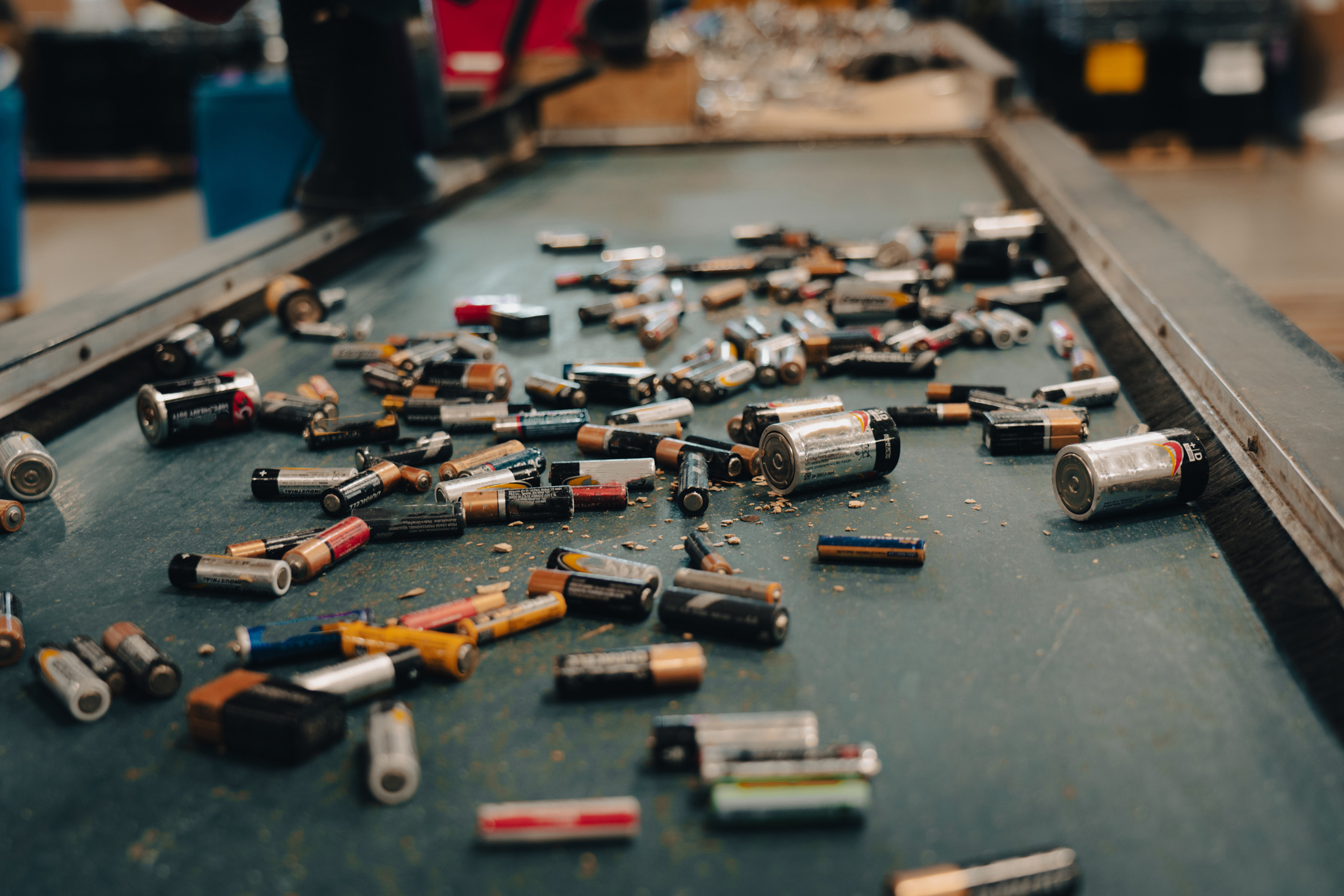
Looking Deeper: The Sorting Process
Figure 4: The sorting process (image courtesy of Cirba Solutions)
Think About It
As workers sort batteries by chemistry and format, what challenges do you notice? Why can’t batteries simply be tossed in the trash or curbside recycling bins?
Ask students to think about why sorting is such a critical step. What happens if the wrong battery type is mixed in?
Figure 5: Recycling Collection boxes and kiosks (Images courtesy of Cirba Solutions)
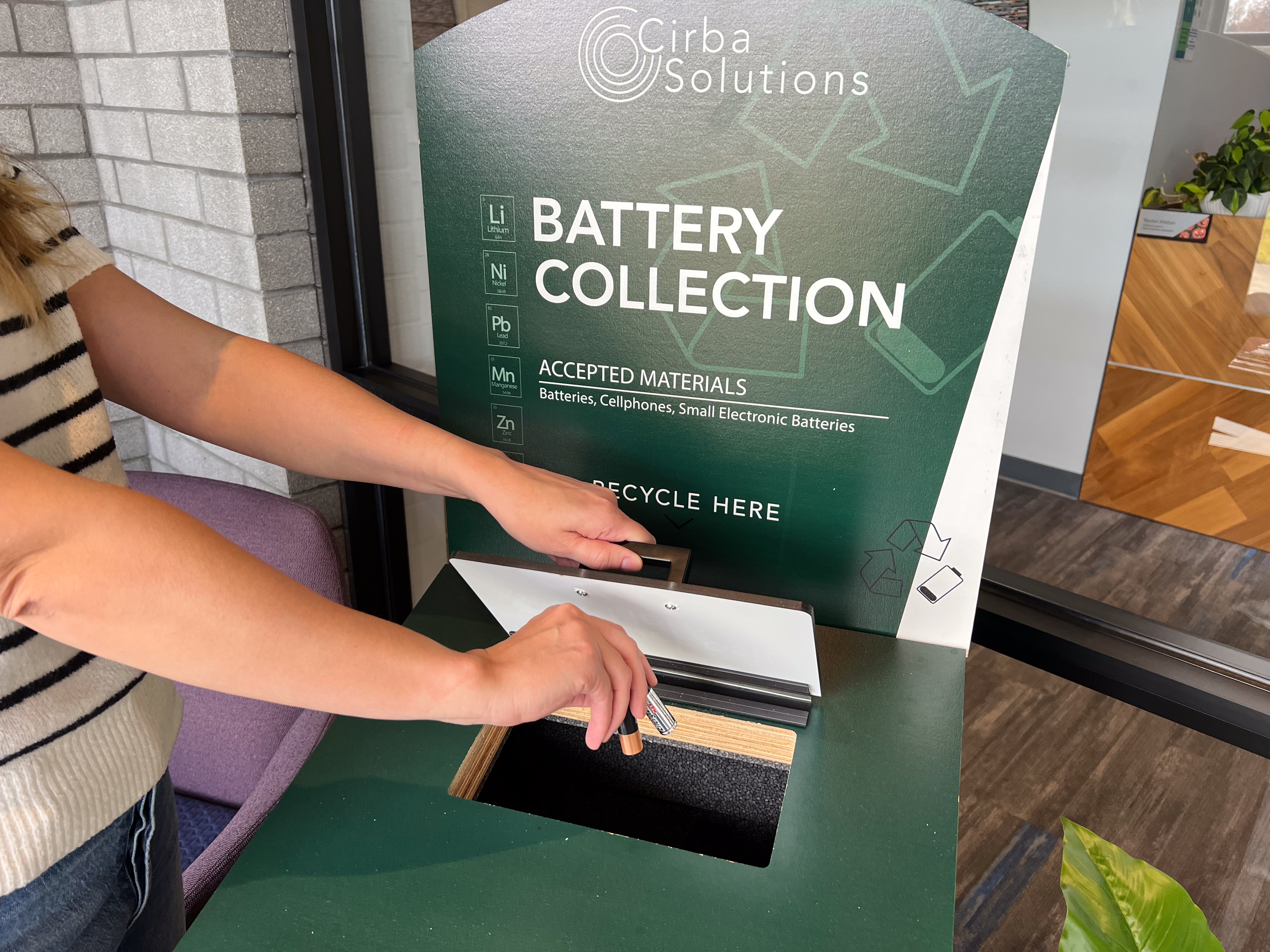
If we can’t simply throw batteries away or place them in curbside recycling, why are resources such as battery collection kits and kiosks an important part of the battery recycling and critical mineral refinement process?
Once batteries are no longer used, they need to be collected, handled, and transported safely with Department of Transportation (DOT) guidelines. Battery recycling kiosks were designed by recycling companies to give people easy and increased access to drop off used batteries instead of throwing them in the trash or curbside recycling bins, which increases risks associated with lithium-ion batteries. Once those batteries are safely collected and packaged, they are moved to certified recycling facilities that are specifically designed to handle end-of-life and DDR batteries, sort by chemistry and format, process the materials, and extract the critical minerals to be used over and over again. Collecting and transporting used batteries from homes, to kits/kiosks, to a certified recycling center is a key part of the system.
Figure 6: A truck transports batteries to a facility (Image courtesy of Cirba Solutions)

Breaking Down The Materials
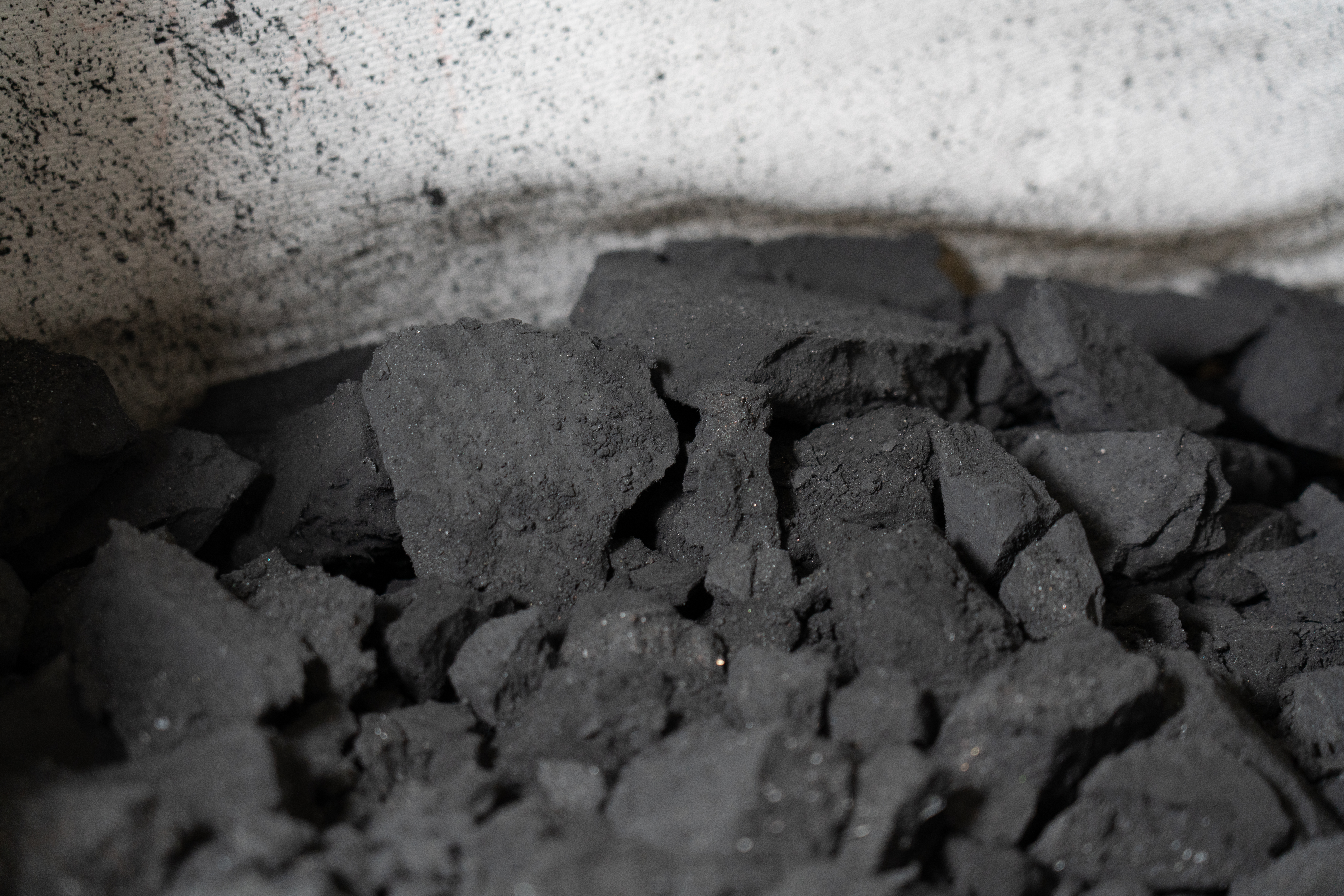
Figure 7: Black mass (image courtesy of Cirba Solutions)
Think About It
Take a look at this material. What do you think this material is? Why might it look like this and still be valuable?
After lithium batteries are processed, a material called black mass is produced. It might not look like much, but it contains incredibly valuable materials like lithium, nickel, cobalt, etc. that can be recovered, refined, and reused. This step is what makes recycling so important. Recycling turns waste into a resource. And this is where the process comes full circle. These materials can be extracted from used batteries again and again to produce new batteries.
Black mass, the material you get once lithium batteries are shredded and processed, contains a variety of materials such as:
- Lithium
- Cobalt
- Nickel
- Manganese
- Graphite
These materials are used to make new lithium batteries.
Dive into Data
Explore these official data sets to investigate trends in minerals like lithium, cobalt, and nickel:
In your digital or paper journal, respond to the following investigation:
| Data Investigation Questions |
|
Circular Economy
This entire process is part of a circular economy. If we do not treat batteries as waste, something simply to throw away, then the materials inside used batteries can be recovered and processed to be used again and again. This reduces the amount of lithium, cobalt, and nickel being mined from the Earth. In a circular system, materials are moving through a closed-loop instead of being used and thrown away.
This is a good point to pause and have students predict what happens next. What do they think black mass is used for?
Reflection
- Why is battery recycling important?
- How does battery recycling affect our environment, future technology development, and increase domestic supply chains and national security?
Extension
Focus on a circular system rather than a linear one.
Create a sketch, slide, or model that shows how a battery moves through the circular system.
Students might point out people not recycling batteries, safety issues, etc.
Be sure to include:
- Where materials begin (extraction and sourcing)
- How batteries are used in our everyday lives
- What happens after use (collection and transportation)
- How materials are recovered (processing, black mass)
- How materials are reused (new batteries or products)
Show where the system can break down or face challenges.
Students might point out people not recycling batteries, safety issues, etc.
Then answer:
- What is one challenge in the system?
- What is a realistic way to improve it?
Wrap-Up Reflection
Answer this question: Why is it important to keep materials moving in a closed-loop instead of starting over every time?